


 English English
Views: 0 Author: Site Editor Publish Time: 2026-11-18 Origin: Site


Is your recycling equipment failing under heavy daily loads? The global demand for heavy-duty waste management is surging. Facilities face immense strain on their industrial machinery. Processing tough materials like thick plastic lumps, dense wood, commercial waste, and rubber requires far more than a standard crusher. It demands a machine engineered for extreme torque, relentless endurance, and precise shearing capabilities.
The global push toward circular economy models has fundamentally shifted waste management. Modern facilities are no longer just reducing volume. They must produce high-grade secondary raw materials. This industry-wide evolution demands tighter output specifications and continuous throughput. Legacy crushers simply cannot keep up with these new environmental mandates. They stall, overheat, and suffer from catastrophic blade failures.
A Single Shaft Shredder serves as the ultimate workhorse for these exact challenges. The secret to this equipment's longevity and efficiency does not just lie in its basic design. It is deeply rooted in how it is manufactured. In this comprehensive guide, we will take you behind the scenes of a professional manufacturing facility. You will explore the precision engineering, core components, and rigorous quality control processes required to build equipment capable of conquering the toughest recycling environments.
Key Takeaways
Precision Engineering: Reliable shredding relies heavily on CNC-machined rotors and vacuum heat-treated blades. These handle high-stress, abrasive environments without premature failure.
Application-Specific Customization: Top-tier factories build customized hopper structures, rotor profiles, and screen sizes based on the exact material bulk density.
Component Quality Dictates Lifespan: Heavy-duty performance is driven by the load-sensing hydraulic pusher, the reduction gearbox, and the motor system integrated into the chassis.
Rigorous Factory Testing: Factory Acceptance Testing ensures the equipment performs flawlessly under real-world conditions before shipping.
An industrial size-reduction machine relies on a solid steel rotating shaft equipped with indexable cutting blades. These rotating knives work alongside stationary bed knives mounted securely to the machine housing. As the rotor turns at low speeds, a hydraulic pusher automatically forces bulky materials against the cutting mechanism. Imagine a massive block of purged plastic. Standard crushers would choke and stall immediately. A reliable heavy-duty single shaft shredding machine methodically shaves the block down. This continuous shearing action reduces the material steadily. The particles remain in the cutting chamber until they are small enough to pass through a sizing screen beneath the rotor. This transforms oversized waste into uniform particles in a single pass.
Standard crushers often fail when introduced to dense or highly abrasive materials. Heavy-duty shredders are specifically manufactured to process complex industrial loads without stalling. They serve as the ideal solution for several challenging material categories:
Plastics: Extrusion purgings, thick-walled pipes, hard plastic lumps, and woven jumbo bags require high torque. Precise cutting gaps shear these materials cleanly without generating excessive frictional heat.
Wood: Wooden pallets, timber waste, and tree stumps demand a robust rotor design. The machine must handle dense knots and occasional tramp metal like hidden nails without shattering the blades.
Alternative Fuels: Municipal Solid Waste, Refuse-Derived Fuel, and Solid Recovered Fuel necessitate continuous processing capabilities. High throughput and extreme resistance to unpredictable waste streams are mandatory.
Rubber and Textiles: Scrap tires, carpets, and heavy fabrics require aggressive cutting angles. Specialized rotor profiles prevent flexible, high-tensile fibers from wrapping around the shaft and causing blockages.
The manufacturing foundation of any reliable shredder is precision machining. Professional factories utilize advanced Computer Numerical Control machining centers. They craft critical components such as the main rotor, bearing housings, and blade seats. Precision at the micrometer level is strictly required here. Machining bearing housings and rotor shafts with exact tolerances significantly reduces operational vibration. This prevents premature bearing wear and minimizes metal fatigue on the chassis. It also ensures the cutting gap between the rotor blades and bed knives remains perfectly consistent, maximizing cutting efficiency.
The chassis of a shredder must absorb immense shock loads and extreme torque daily. Top-tier factories fabricate the main frame using exceptionally thick, high-grade carbon steel plates. The construction process involves heavy-duty, continuous welding techniques rather than weak spot welding. After the welding process is complete, professional manufacturers subject the entire frame to thermal stress-relieving treatments in massive industrial ovens. This crucial step eliminates internal stresses caused by the welding heat. The frame will not warp, crack, or deform when the machine encounters uncrushable objects or operates under maximum load capacities.
The rotor acts as the beating heart of the machine. Engineers often deploy a V-shaped rotor array. This specific geometry prevents material from wandering toward the side walls, reducing lateral friction and wear on the housing. The metallurgy of the cutting blades is equally critical. Industrial blades are typically forged from high-alloy tool steels like D2, DC53, or Cr12MoV. Factories subject these blades to rigorous vacuum heat treatment processes, achieving a Rockwell Hardness of 58 to 62. This specific hardness range provides an optimal balance. It delivers high wear resistance to maintain a razor-sharp edge while retaining impact toughness to prevent shattering upon sudden impact.
Without an effective feeding mechanism, even the most powerful rotor cannot maintain high throughput. The hydraulic pusher is responsible for continuously forcing bulky, bouncing materials against the spinning rotor. Advanced factories design these hydraulic systems with load-sensing programmable logic controllers. If the rotor experiences a sudden spike in amperage due to an overly dense material block, the control system automatically instructs the hydraulic pusher to retract briefly. This intelligent, adjustable speed and pressure system prevents material jamming. It protects the electric motor from overloading and optimizes the hourly processing capacity without requiring constant human intervention.
A true heavy-duty machine relies on a robust drive system designed specifically for high-torque, low-speed operation. Top manufacturers integrate world-class electrical systems, utilizing components like Siemens motors paired with specialized heavy-duty reduction gearboxes. High-end models feature premium roller bearings, often SKF or equivalent, housed in oversized bearing blocks to withstand immense radial loads. Shredding inherently generates severe mechanical shocks. Factories install fluid couplings or specialized shock-absorbing elastomeric couplings between the motor and the gearbox. When a hidden steel bolt enters the cutting chamber, these couplings isolate the resulting vibrations. They protect the internal gears from sudden torque spikes, drastically extending the lifespan of the entire drive train.
Unlike primary shredders that output random coarse chunks, single shaft machines utilize a sizing screen to guarantee a consistent final particle size. Factories build these screens from wear-resistant steel plates like Hardox to withstand constant, aggressive abrasion. Mounted directly beneath the rotor, the screen ensures material continues to be sheared inside the cutting chamber until it is small enough to fall through the designated holes. Manufacturers design these screens with quick-change mechanisms. Operators on the facility floor can easily swap out screens with different hole diameters such as 20mm, 40mm, or 60mm depending on downstream processing requirements.
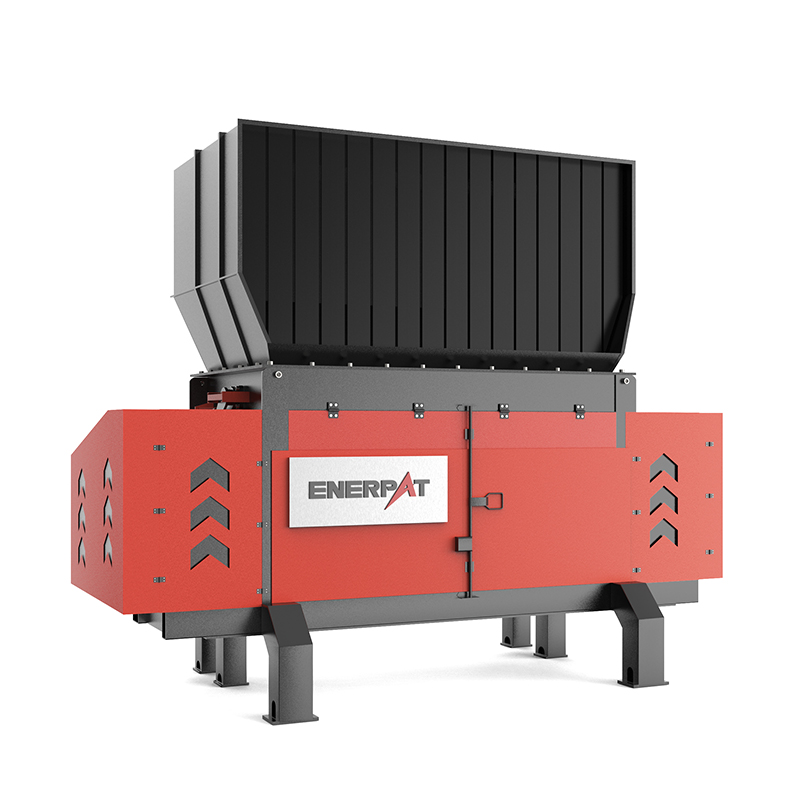
Recent industry analyses highlight a significant shift in the heavy-duty recycling sector. Global waste streams are becoming increasingly complex. They often blend rigid plastics with abrasive contaminants or electronic components. The era of the one-size-fits-all crusher is effectively over. Modern recycling facilities demand highly specialized, adaptable machinery. Leading manufacturing facilities are pivoting from mass production to bespoke engineering. They focus heavily on modular designs and advanced wear-protection technologies.
Material Type | Recommended Rotor Design | Cooling Requirement | Typical Screen Size |
|---|---|---|---|
Hard Plastics & Purgings | V-shaped array, flat blades | Rotor & Housing Water Cooling | 30mm - 50mm |
Waste Wood & Pallets | Aggressive concave inserts | Standard Air Cooling | 40mm - 80mm |
RDF / SRF / MSW | Hard-faced welding, chevron layout | Optional based on moisture | 50mm - 100mm |
E-Waste & Cables | High-density blade arrangement | Standard Air Cooling | 20mm - 40mm |
Friction becomes a significant operational challenge when processing heat-sensitive materials like plastics. High friction generates intense heat. This can cause plastic purgings or agricultural films to melt, smear, and eventually wrap tightly around the rotor shaft. To combat this specific issue, factories customize machines with integrated water-cooling systems. Chilled water actively circulates through a hollowed-out rotor shaft and sometimes through the machine housing itself. This active cooling keeps the cutting chamber temperature strictly controlled. Plastics are sheared cleanly rather than melted into a stubborn mass.
Wood processing requires a fundamentally different mechanical approach. Timber waste, pallets, and tree stumps are highly abrasive. They frequently contain hidden tramp metal such as screws, nails, or heavy bolts. A shredder adapted for wood features an aggressive rotor design with hard-faced welding applied directly to the rotor body to prevent abrasive wear. Factories equip these machines with specialized concave cutting inserts that provide a deeper bite into the wood. Robust shock-absorption systems handle the sudden, violent impacts of hidden metals without transferring that destructive energy to the gearbox.
Adapting an industrial single rotor shredder for electronic waste or Municipal Solid Waste introduces extreme abrasion and highly unpredictable contaminants. Factories install heavy-duty wear packages for these demanding applications. This intricate process involves lining the internal cutting chamber, the hydraulic pusher face, and the screen with replaceable Hardox wear plates. Adding this extra layer of armor preserves the core structural integrity of the machine. When abrasive materials eventually wear down the internal surfaces, operators simply unbolt and replace the armor plates rather than undertaking massive welding repairs on the main chassis.
Quality control begins long before the machine is ever assembled. Reputable factories implement strict protocols for all raw materials entering the facility. This includes ultrasonic flaw detection testing on the solid steel rotor shafts. Engineers ensure there are no microscopic internal cracks or voids that could lead to a snapped shaft under heavy loads. Factories utilize digital hardness testers and spectroscopy to verify the exact chemical composition and heat treatment success of the cutting tools. This guarantees they meet the strict metallurgical standards required to survive in a heavy-duty recycling environment.
The final and arguably most crucial step before an industrial shredder leaves the manufacturing floor is the Factory Acceptance Testing. During this dynamic phase, the shredder is fully assembled, wired, and powered on. The factory runs the machine using actual material supplied by the customer or a strictly equivalent substitute. Engineers meticulously monitor key performance indicators. They track hourly throughput, motor amperage stability, bearing temperatures, and decibel levels. This rigorous real-world simulation ensures the machine operates flawlessly and meets all contractual output specifications before it is crated and shipped.
A single shaft model is the optimal choice when a recycling facility requires a uniform, specific output size in a single pass. Because it utilizes a sizing screen, the machine guarantees that no oversized material escapes the cutting chamber. This makes it highly effective for processing thick, solid, and dense materials like plastic blocks, extrusion purgings, wood logs, and thick rubber. The output is usually small and consistent enough to be fed directly into secondary processing equipment like granulators or extruders without further sizing.
A double shaft shredder operates without a sizing screen. It uses two counter-rotating shafts covered in hooked blades to grab, tear, and shear material. This design is better suited for primary volume reduction rather than precise sizing. Double shaft shredders excel at processing hollow, bulky, or highly contaminated materials. Whole car bodies, large metal drums, or loose municipal waste bags are prime examples. The exact output size is less critical here. The primary goal is to quickly break down massive items into manageable strips for sorting or landfilling.
Wear and tear are unavoidable realities in heavy-duty recycling. Cutting blades and sizing screens are consumables that require periodic replacement to maintain efficiency. Buying directly from a reputable manufacturing factory guarantees a steady, reliable supply of exact-fit Original Equipment Manufacturer replacement parts. Top factories design their cutting blades to be four-way reversible. Instead of replacing a blade as soon as its cutting edge becomes dull, maintenance personnel simply unbolt the insert, rotate it 90 degrees to expose a fresh edge, and bolt it back in. This effectively extends the lifespan of a single set of blades by 400 percent before a new purchase is necessary.
Downtime in a high-capacity recycling plant translates directly to thousands of dollars in lost revenue. Factory-backed technical support is a critical component of the machine's overall value. Professional manufacturers provide comprehensive on-site commissioning. They send experienced engineers to the client's facility to ensure the machine is installed, leveled, and wired correctly. They conduct thorough operator training covering routine maintenance, blade rotation, and safety protocols. Modern shredders are often equipped with remote diagnostic modules. Factory technicians can troubleshoot software or electrical issues from anywhere in the world in real-time.
Buyers should heavily prioritize factories with a proven track record in their specific recycling niche. A factory that excels at building wood shredders may not have the nuanced engineering expertise to build a machine for heat-sensitive plastics or highly abrasive e-waste. Decision-makers should request detailed case studies, reference plants, and unedited video evidence of the factory's machines processing the exact material they intend to recycle. A manufacturer's willingness to perform a custom material test is a strong indicator of their confidence and mechanical capability.
Industrial shredders are immensely powerful, potentially dangerous machines. They must adhere to strict safety and quality standards. Buyers must verify that the factory holds recognized global certifications. ISO 9001 certification ensures the factory maintains a consistent, audited quality management system during the manufacturing process. CE certification or equivalent regional safety standards confirm that the machine's electrical panels, emergency stop systems, and safety interlocks meet strict international safety regulations. This ultimately protects floor operators from severe workplace accidents.
Digital communication makes global procurement easier than ever. However, absolutely nothing replaces the value of a comprehensive factory visit. Inspecting the facility in person or via a live virtual tour allows buyers to verify the manufacturer's true capabilities. Decision-makers should actively look for the presence of heavy-duty CNC machining centers, dedicated assembly lines, and a well-stocked inventory of spare parts. This critical step separates genuine, fully-equipped manufacturers from trading companies or assembly-only workshops that outsource their critical machining processes.
Conclusion
Investing in heavy-duty size reduction equipment is a major capital expenditure. Its long-term performance is directly tied to the engineering, materials, and quality control processes of the factory that builds it. A reliable machine is not born by accident. It depends on strict factory standards and bespoke engineering tailored to your specific waste stream. Partnering with a trusted, specialized manufacturer ensures you receive a machine customized for your exact material, backed by reliable global support. Do not settle for off-the-shelf solutions for complex recycling challenges. Visit the official product page to explore technical specifications and secure heavy-duty shredding solutions tailored to your facility's exact needs.
The primary advantage is its unique ability to produce a highly consistent, uniform output size in a single pass. This is achieved through the precise combination of a high-speed cutting rotor and a sizing screen mounted beneath it. Material only exits the cutting chamber when it reaches the desired, predetermined dimension.
A shredder is designed for primary size reduction of large, thick, and tough materials operating at low speeds and high torque. A granulator operates at much higher speeds with less torque, designed to take pre-shredded material and cut it down into very fine flakes or granules. Shredders handle the heavy lifting, while granulators handle the fine finishing.
Power consumption varies drastically based on the machine size and the material being processed. Smaller industrial models may use 22kW to 37kW motors, while heavy-duty models processing dense plastics or tires often utilize dual-motor setups ranging from 75kW to 160kW or more. Advanced PLC systems help optimize power draw by adjusting the hydraulic pusher speed based on the motor's real-time amperage load.
Blade lifespan is entirely dependent on the abrasiveness and contamination level of the material being processed. For clean, soft plastics, blades can easily last for several months. For abrasive materials containing dirt, sand, or glass fibers, wear occurs much faster. Most industrial blades feature a four-way reversible design, allowing operators to rotate them four times to expose fresh edges before purchasing replacements.
While these machines are primarily engineered for plastics, wood, rubber, and commercial waste, heavy-duty models can tolerate light tramp metal. Stray nails in wooden pallets or small staples in cardboard packaging will not destroy the machine. However, they are not designed to process solid, heavy metals. Feeding thick steel pipes or engine blocks into the machine will cause severe, catastrophic damage to the cutting tools and the rotor body.
The capital cost is driven by several core engineering factors. The physical size of the cutting chamber, the kilowatt power of the electric motors, the width of the rotor, and the metallurgy of the cutting blades all play a role. Factory customizations such as specialized hydraulic hoppers, rotor water-cooling systems, heavy-duty wear packages, and advanced PLC control panels will directly influence the final investment price.
The hydraulic pusher is a critical component that ensures continuous, efficient operation. It actively forces bulky, lightweight, or bouncing materials against the spinning cutting rotor. Without the pusher, materials might simply float or bounce above the blades, causing the machine to run empty and waste energy. The pusher maximizes hourly throughput and prevents material bridging or jamming in the hopper.


